

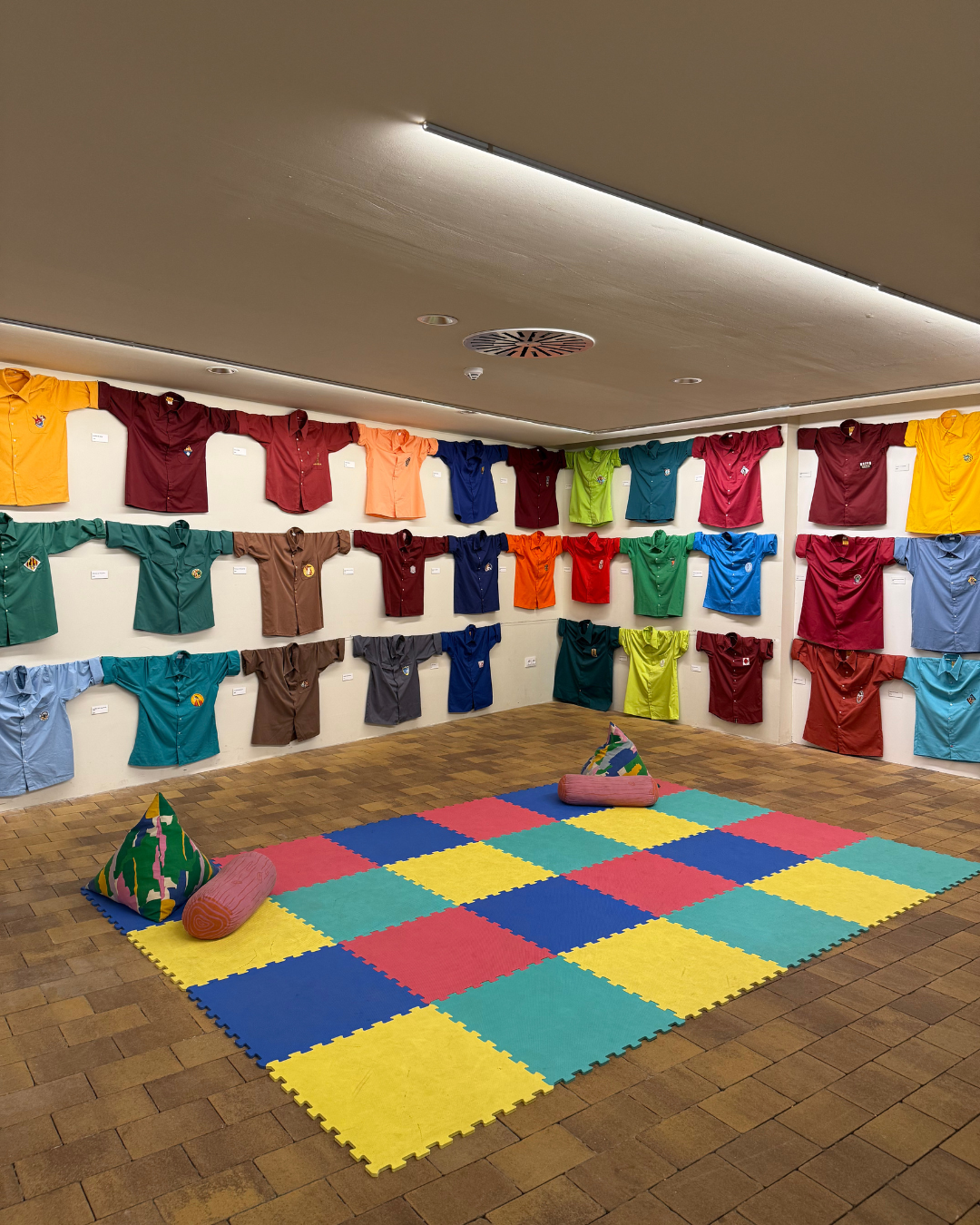
Casteller shirts are one of the most recognisable elements of the human tower (castells) tradition. Their colours make it possible to identify the different teams (colles) in the square, but behind every shirt there is also a story, a community and a sense of belonging.
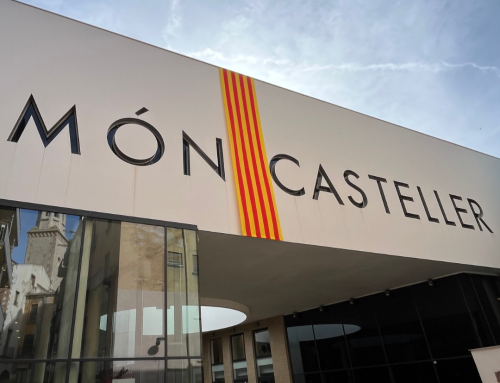
At the Museu Casteller de Catalunya, in Valls, visitors can discover the history and evolution of this essential part of traditional casteller clothing.
Through the video series “More Than a Shirt” (Més que una camisa), we explore fascinating facts about casteller shirts, from those worn by today’s teams to the earliest prototypes and the introduction of team emblems.
Pau, a casteller and director of the Museu Casteller, guides us through three episodes to discover the stories behind one of the most meaningful symbols of casteller identity.
SHIRTS WORN BY TODAY’S HUMAN TOWER TEAMS
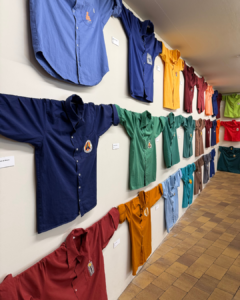
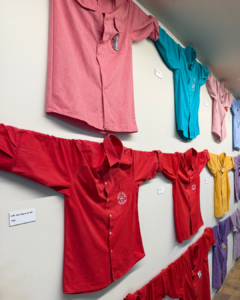
The first episode of “More Than a Shirt” introduces us to one of the most representative displays visitors can discover at the Museu Casteller: the shirts of the castle-building teams currently active.
More than one hundred shirts, featuring a wide variety of colours and emblems, reflect the richness and diversity of today’s casteller community.
Each shirt identifies a particular team, but its meaning goes far beyond its colour. Wearing it also represents being part of a group, sharing common values and belonging to a community that works together towards a shared goal.
That is why talking about casteller shirts also means talking about identity, pride and a sense of belonging.
WHAT DO CASTELLERS WEAR?
The shirt is probably the most visible garment, but it is not the only characteristic element of the castellers’ clothes.
In the second episode of the series, we discover traditional casteller clothing in one of the most iconic rooms of the Museu Casteller de Catalunya, featuring an enxaneta — the child who climbs to the top of a human tower — wearing the shirts of more than one hundred currently active casteller teams.
Alongside the shirt, we find other characteristic garments, including the sash (faixa), white trousers and neckerchief (mocador).
These garments form part of the distinctive image of human towers at performances and celebrations throughout the region, making the casteller tradition instantly recognisable.
WHAT IS THE ORIGIN OF CASTELLER SHIRTS?
Casteller shirts have not always looked the way they do today.
To understand their evolution, we need to look back and discover how traditional casteller clothing has changed throughout the history of human towers.
In the third and final episode of “More Than a Shirt”, we explore some of the earliest prototypes of casteller shirts physically preserved at the Museu Casteller.
These garments allow us to see how shirts have evolved over time and learn about some of the changes that have shaped their current appearance, such as the appearance of the first gang shields.
A journey into the past that helps us understand a tradition that preserves its roots while continuing to evolve from generation to generation.
MORE THAN A SHIRT: CASTELLER IDENTITY AND HISTORY
A casteller shirt can tell many stories.
Its colour represents a team. Its emblem reflects an identity. And the people who have worn it are part of a collective history built over generations.
Through the “More Than a Shirt” series, the Museu Casteller de Catalunya aims to bring this part of the history of human towers closer to everyone interested in discovering more about one of the most representative traditions of Catalan culture.
The videos offer just a small glimpse of everything visitors can discover during a visit to the Museum.
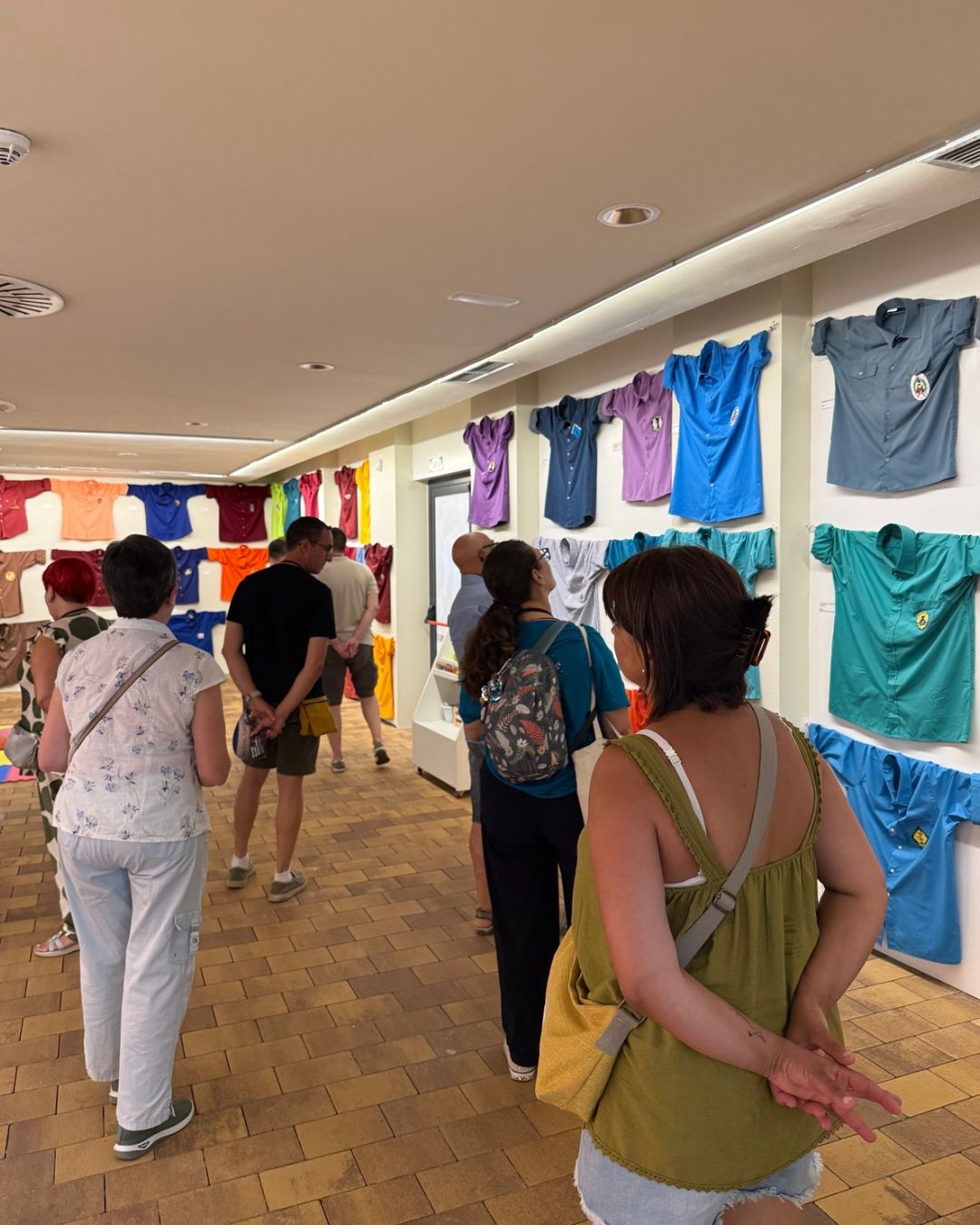
DISCOVER CASTELLER SHIRTS AT THE MUSEU CASTELLER DE CATALUNYA
If you would like to see the shirts worn by human tower teams up close, discover the evolution of traditional casteller clothing and explore more than two hundred years of human tower history, we look forward to welcoming you to the Museu Casteller of Catalonia, in Valls.
A visit that invites you to discover human towers beyond the town square and understand the stories, people, values and emotions behind this tradition.
More than one hundred colours. More than one hundred stories. One shared passion: human towers.

WE ARE SOCIAL