

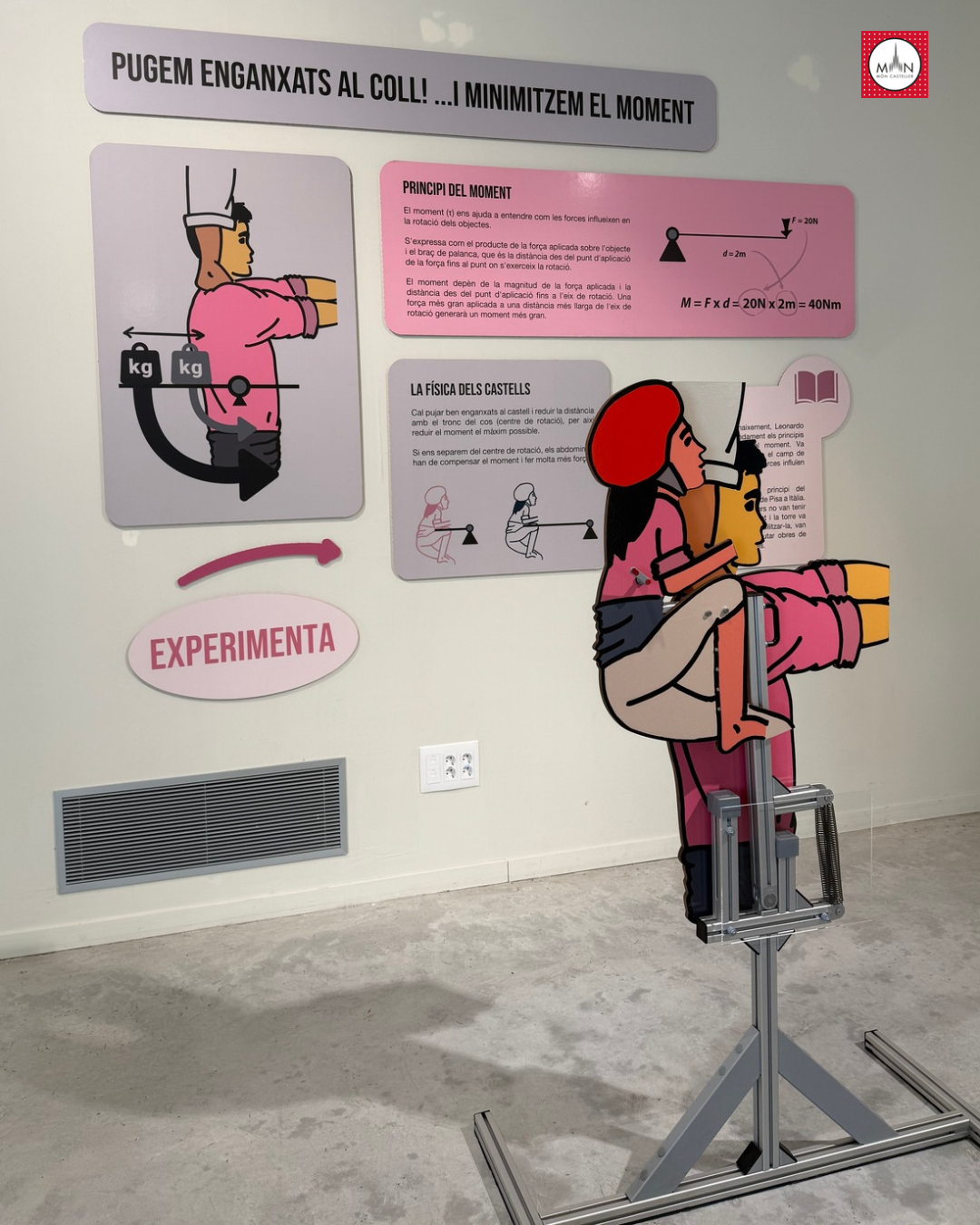
What science is behind castells? How do they manage to stay balanced? How are the forces distributed among the castellers? And what could a castell and a cathedral have in common?At the Casteller Museum of Catalonia in Valls, the temporary exhibition dedicated to the science of castells allows visitors to discover the principles of physics, engineering and architecture that underpin these human towers.
A different way to approach a tradition of more than two hundred years and understand that, behind the strength, balance, courage and common sense, there is also a great deal of science.
Through the video series ‘The Science of Castells’, which we have shared on the Castellers Museum’s social media channels, we have explored some of the concepts featured in the exhibition. Three chapters to view castells with a fresh pair of eyes.
What science is there behind castles?
When a castle begins to grow, different scientific principles come into play. Forces, balance, structure, support points or weight distribution are some of the concepts that can help us understand how a castle structure works.
In the first chapter of ‘The Science of Castells’, we delve into this relationship between castells and science.
Concepts that might go unnoticed when we’re experiencing the excitement of a casteller event, but which offer an opportunity to understand from another perspective what happens as the castell is being built.
Because discovering how castells work also allows us to better understand the complexity behind each formation.
The physics of castells: forces, balance and levers
When we build castells, physics also pitches in.
Forces, balances, fulcrums and levers are part of many of the movements and positions we find within a castell.
In the second chapter of the series, we approach the physics of castells in a visual and interactive way. One of the concepts we can discover is the law of the lever, which allows us to understand the relationship between force, fulcrums and different positions.
The temporary exhibition at the Castellers Museum thus transforms scientific concepts that might seem abstract into experiences that visitors can observe, experience and relate to the practice of castling.
What do castles and cathedrals have in common?
A castle and a cathedral may seem completely different. But they both share a great challenge: to grow in height while maintaining their structure and stability.
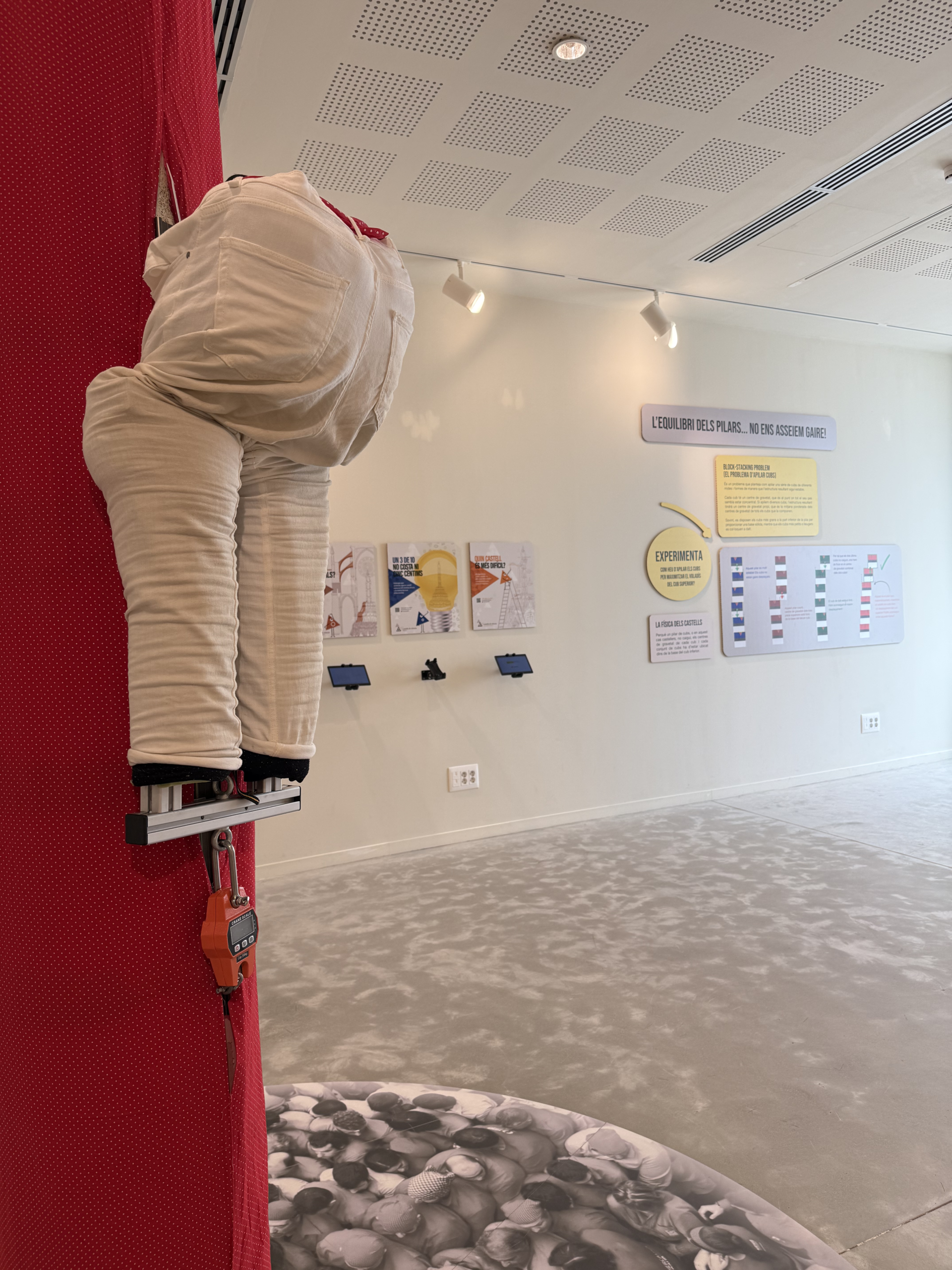
In the third chapter of ‘The Science of Castells’, thanks to the ‘Castells de Ciència’ project by the Rovira i Virgili University, we discover how different concepts from architecture and engineering can help us to better understand castell structures.
Lining, levers, the distribution of forces and structures allow us to draw surprising parallels between the world of castles and architecture.
A new perspective that shows that behind a castle there is strength and confidence, but also balance, structure, engineering and science.
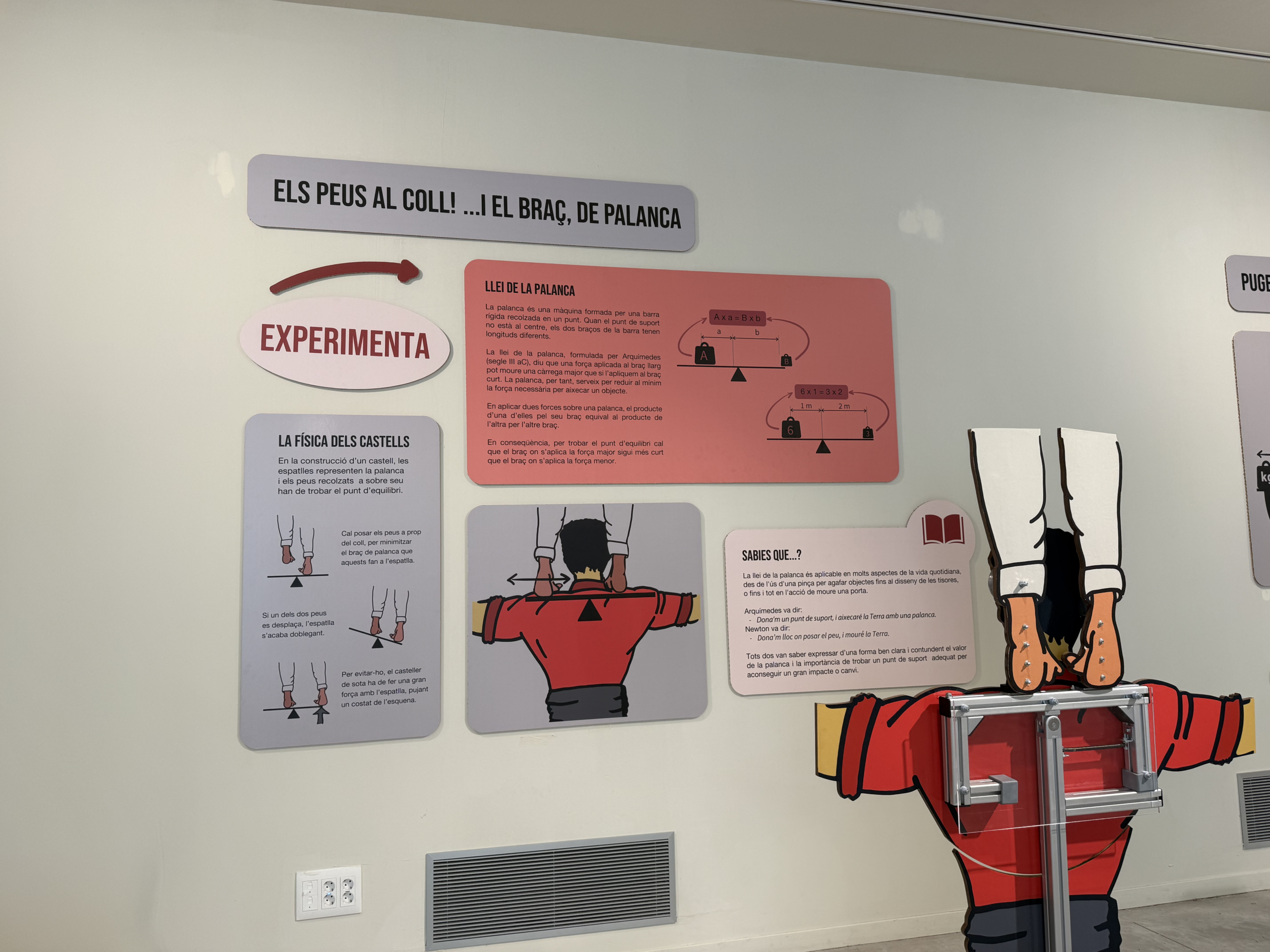
An interactive exhibition on castells and science in Valls
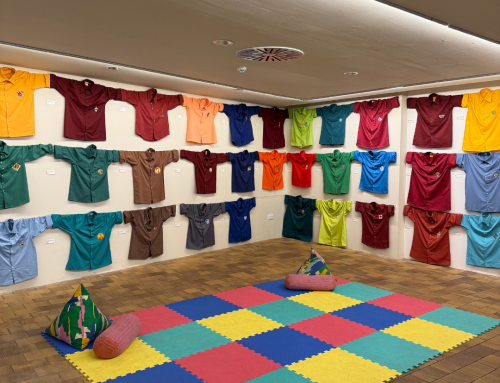
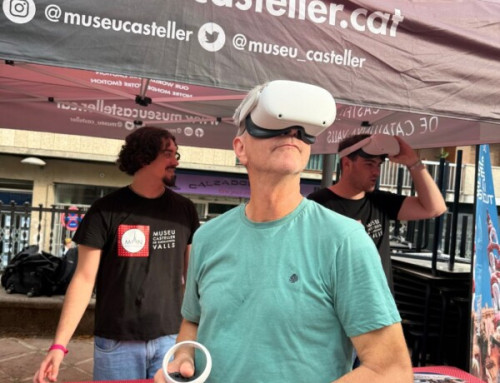
The temporary exhibition at the Casteller Museum of Catalonia is not just for looking. It also invites visitors to experiment, interact and ask questions.
Why does a castell stand upright? How are the forces distributed? How important is balance? How can physics help us understand what happens on the square?
Through various resources, the exhibition brings the science of castles closer to both those involved in the world of castling and those who want to discover this tradition for the first time.
A proposal that combines castle culture, science popularisation and experimentation in a single space.
Visit the ‘The Science of Castells’ exhibition at the Casteller Museum of Catalonia
If you’re looking for things to do in Valls or want to delve deeper into casteller culture from a different perspective, this is an opportunity to discover everything that science can tell us about castells.
The ‘The Science of Castells’ video series shows just a small part of everything you can experience in person at the Museum.
What’s more, the current temporary exhibition will be closing soon to make way for a new one. If you haven’t visited it yet, take advantage of the last few weeks to discover it.
We look forward to seeing you at the Casteller Museum of Catalonia in Valls.
Come and experience, discover and see castells in a whole new light.
Because behind every castell are people, trust and emotion. But there’s also a lot of science.

WE ARE SOCIAL